The Cost of Staying Put: What Enterprise Teams Get Wrong About Software Version Risk

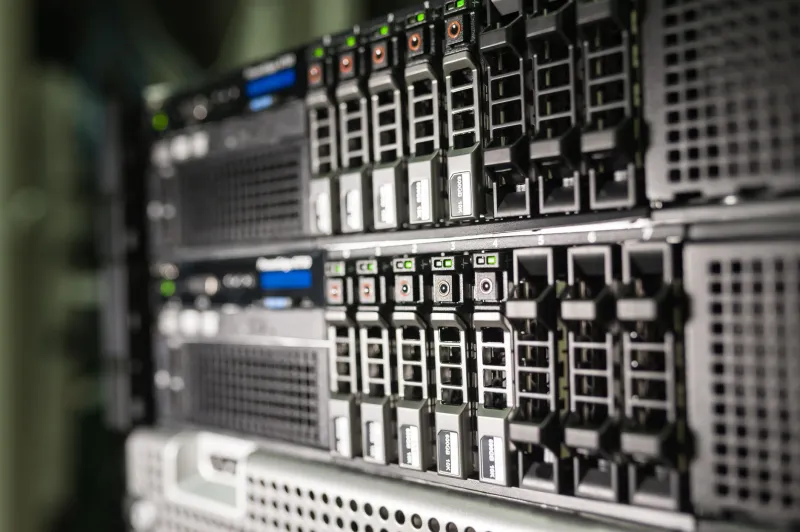
Photo: Dllu, CC BY-SA 4.0, via Wikimedia Commons
Stability is a legitimate enterprise value. In environments where software failures carry operational, financial, or reputational consequences, the instinct to avoid unnecessary change is not irrational — it reflects hard-earned experience with the disruption that poorly managed upgrades can produce. The problem is that this instinct, applied without discipline, consistently leads organizations to a position they did not intend to occupy: running software that is no longer supported, increasingly vulnerable, and architecturally incompatible with the modern platforms their business depends on.
The decision to defer a major software version update is rarely made dramatically. It happens through a series of deferrals, each individually justifiable, that accumulate into a posture of structural stagnation. By the time the organization recognizes the problem, the gap between their current version and the supported release has grown large enough that the upgrade project they were trying to avoid has become significantly more complex and costly than it would have been two years earlier.
The Compounding Logic of Version Debt
Software version debt operates on a compounding curve that most enterprise teams underestimate because the costs are not linear. Moving from version N to version N+1 is typically a manageable project. Moving from version N to version N+4, after three cycles of deferral, is rarely four times more difficult — it is often an order of magnitude more complex, because each skipped version introduces architectural changes, deprecated APIs, altered data models, and modified security frameworks that must all be reconciled simultaneously.
Customizations and integrations amplify this dynamic significantly. Enterprise software deployments are rarely vanilla installations. They accumulate custom configurations, workflow modifications, third-party integrations, and bespoke reporting structures that represent years of operational investment. Each of these customizations must be evaluated, updated, or rebuilt when a major version upgrade is undertaken. When upgrades are deferred across multiple version cycles, the customization surface area grows — and so does the remediation effort required to bridge the gap.
Vendor support policies create a hard boundary that deferred upgrade strategies eventually collide with. Most enterprise software vendors maintain active support for a limited number of major versions. When an organization's deployed version falls outside that support window, they lose access to security patches, bug fixes, and technical support resources. The operational risk of running unsupported software is significant; the compliance implications in regulated industries can be immediate and severe.
What Vendors Obscure in Their Upgrade Economics
Enterprise software vendors have a complex relationship with upgrade messaging. On one hand, they have a genuine business interest in keeping their installed base current — customers on current versions are easier to support, more likely to adopt new capabilities, and more defensible in security incident conversations. On the other hand, vendors are often reluctant to communicate the full cost of version deferral in terms that create urgency, because doing so can damage the relationship with customers who are already resistant to the upgrade proposition.
The result is upgrade communication that tends to emphasize features rather than risk. New version announcements focus on capabilities, user experience improvements, and competitive differentiation. The security vulnerability exposure associated with older versions, the escalating cost of maintaining custom integrations across widening version gaps, and the support lifecycle implications of continued deferral are typically communicated in separate, lower-visibility channels — support bulletins, end-of-life notices, and technical documentation that does not reach the business decision-makers who control upgrade budgets.
Total cost of ownership calculations provided by vendors during upgrade sales cycles are similarly selective. They typically capture the direct costs of the upgrade project — licensing, professional services, training — while omitting the ongoing costs of remaining on the current version: the security tooling required to compensate for absent patches, the custom development required to maintain integrations that the vendor has deprecated, and the productivity cost of operating on a platform that lacks capabilities that the business has learned to work around.
Measuring Upgrade Risk More Accurately
The conventional enterprise approach to upgrade risk assessment focuses primarily on the probability and impact of project failure — the risk that the upgrade itself will cause disruption. This framing is incomplete because it treats the pre-upgrade state as a stable baseline, when in reality the pre-upgrade state carries its own risk profile that grows over time.
A more complete risk assessment requires evaluating both sides of the equation: the risk of proceeding with the upgrade and the risk of continuing to defer it. Several metrics are useful in constructing the deferral risk side of this calculation.
Security vulnerability exposure can be quantified by reviewing the CVE history for the vendor's platform and identifying vulnerabilities that affect the organization's current version but have been patched in more recent releases. The number, severity, and exploitability of unpatched vulnerabilities provide a concrete measure of the security risk associated with continued deferral — one that can be translated into business risk terms that executive decision-makers can evaluate against upgrade project costs.
Integration stability metrics offer another useful signal. Tracking the frequency and cost of integration failures, API compatibility issues, and custom code maintenance requirements provides evidence of the operational cost of running on an older version in a technology environment that continues to evolve around it. Organizations that have been deferring upgrades for multiple cycles typically find that these maintenance costs have been growing quietly for years, absorbed into operational budgets without being attributed to the version deferral decision that drives them.
Vendor support timeline analysis establishes the hard constraint. Understanding exactly when the current version will exit active support — and what the organization's options are at that point — converts an abstract risk into a concrete planning requirement with a defined deadline.
A Strategic Timeline Approach to Version Currency
The objective of enterprise upgrade strategy should not be perpetual currency — running the latest version at all times regardless of stability or organizational readiness. It should be planned currency: a deliberate approach to version management that maintains the organization within a supportable, secure, and operationally viable range while managing upgrade projects with appropriate discipline.
This approach requires establishing version currency targets as a formal organizational policy rather than leaving upgrade timing to be negotiated case by case against competing budget priorities. A policy that commits the organization to remaining within one major version of the vendor's current release, for example, creates a planning horizon that makes upgrade projects predictable and manageable rather than reactive and disruptive.
Upgrade readiness assessments, conducted on a regular cadence rather than only when an upgrade is imminent, allow organizations to identify integration dependencies, customization conflicts, and resource requirements well in advance of the project. This advance preparation consistently reduces upgrade project costs and timelines — which in turn reduces the organizational resistance that drives deferral behavior in the first place.
The enterprise teams that manage version risk most effectively are those that have reframed the upgrade question. Rather than asking whether this year's budget and operational calendar can accommodate an upgrade, they ask what the cost of deferring the upgrade by another year actually is — in security exposure, in maintenance overhead, in integration complexity, and in the growing gap between their platform capabilities and the operational requirements of a business that has not stood still while their software has.