Measuring Your Exposure: A Systematic Audit Framework for Enterprise Vendor Lock-In Risk
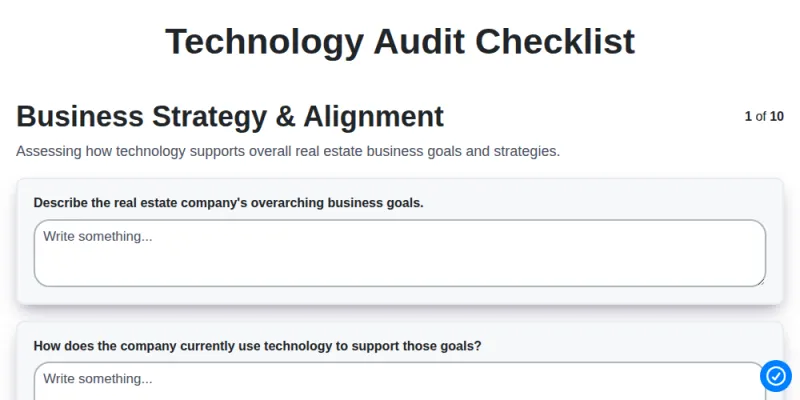
Photo: enterprise software audit checklist boardroom technology strategy, via s.checklistguro.com
Vendor lock-in rarely announces itself. It accumulates gradually—through proprietary data formats, non-standard APIs, contract auto-renewals, and migration barriers that seemed trivial at the time of procurement. By the time an enterprise recognizes the depth of its dependency on a particular vendor, the cost of switching has often grown large enough to make the conversation politically and financially difficult.
The solution is not to avoid vendor relationships. It is to audit them systematically before leverage shifts entirely to the other side of the table.
This framework is designed to give IT leaders a structured, repeatable method for evaluating each component of their enterprise stack against four dimensions of lock-in risk: data portability, API openness, contract flexibility, and migration pathway viability. Each dimension is scored on a scale of one to five, where one represents maximum exposure and five represents maximum optionality.
Why Most Enterprises Audit Too Late
The typical trigger for a vendor lock-in conversation is a renewal negotiation gone poorly, an acquisition that changes product direction, or a pricing increase that cannot be absorbed. At that point, the enterprise is negotiating from weakness. The vendor understands the switching costs better than the customer does—because the vendor designed the architecture.
A proactive audit changes that dynamic. It forces an honest accounting of where dependencies exist, how deep they run, and what it would realistically take to exit. That information is valuable even when no exit is planned. It informs contract negotiations, influences future procurement decisions, and identifies which systems warrant investment in abstraction layers or interoperability standards.
Dimension One: Data Portability
The most fundamental question in any lock-in audit is whether your data belongs to you in a practical sense—not merely in a legal one. Contracts routinely grant data ownership while making extraction technically arduous.
Score each system on the following criteria:
- Export completeness: Can all data—including metadata, audit logs, historical records, and system-generated content—be exported without vendor assistance?
- Format standardization: Is exported data delivered in open, widely supported formats (CSV, JSON, XML, Parquet), or in proprietary schemas that require vendor-supplied tooling to interpret?
- Export frequency and cost: Are bulk exports available on demand, or are they rate-limited, priced as add-ons, or restricted to specific contract tiers?
- Referential integrity: When data is exported, do relational links and dependencies remain intact, or does the extracted dataset require significant reconstruction?
A system that scores poorly across these criteria is one where your data is functionally held hostage, regardless of what the contract says.
Dimension Two: API Openness
Modern enterprise software is integrated software. The degree to which a vendor exposes open, stable, and fully documented APIs directly affects your ability to build integrations, switch adjacent systems, or eventually migrate away from the platform entirely.
Key scoring factors include:
- API coverage: What percentage of core platform functionality is accessible via API? Systems that expose only a subset of features through APIs create invisible walls around the rest.
- Authentication standards: Does the vendor use open standards such as OAuth 2.0 and OpenID Connect, or proprietary authentication mechanisms that complicate integration?
- Versioning and deprecation policy: Are API versions maintained with adequate notice before deprecation? Vendors with aggressive deprecation cycles impose hidden maintenance costs.
- Rate limits and access tiers: Are API rate limits reasonable for enterprise-scale usage, or are they structured in ways that monetize integration activity?
A vendor with a closed or poorly documented API is a vendor who controls the pace and cost of every integration project your organization undertakes.
Dimension Three: Contract Flexibility
Legal documents encode power relationships. Enterprise software contracts should be reviewed not only for their pricing terms but for the structural constraints they impose on your future options.
Evaluate each contract on:
- Auto-renewal mechanics: How much notice is required to prevent automatic renewal? Sixty-day windows are common; thirty-day or shorter windows are a red flag.
- Price escalation clauses: Are future price increases capped, or does the vendor retain unilateral discretion over renewal pricing?
- Termination for convenience: Can your organization exit the contract before term expiration without cause, and at what cost?
- Data return and deletion timelines: What obligations does the vendor have to return or destroy your data upon termination, and within what timeframe?
- Assignment rights: If the vendor is acquired, do your contract terms survive the transaction, or does the acquirer have latitude to modify them?
Contracts that score poorly in this dimension effectively transfer strategic control to the vendor at renewal time.
Dimension Four: Migration Pathway Viability
The final dimension asks a blunt question: if you needed to move off this platform within twelve months, could you? And what would it cost?
This assessment should be grounded in operational reality, not theoretical possibility. Consider:
- Availability of comparable alternatives: Does a competitive market exist for this category, or does the vendor hold a near-monopoly position?
- Internal migration competency: Does your organization have the technical capability to execute a migration, or would you be entirely dependent on third-party professional services?
- Business continuity risk: Can the migration be executed in phases without disrupting core operations, or does it require a high-risk cutover?
- Estimated total migration cost: Include licensing overlap, data transformation, integration rebuilds, staff retraining, and productivity loss during transition.
Compiling Your Scorecard
Once each system in your portfolio has been scored across all four dimensions, map the results against two axes: strategic importance to the business and composite lock-in score. Systems that are both high-importance and high-lock-in represent your most urgent risk surface.
For those systems, the audit output should feed directly into three types of action: renegotiating contract terms at the next available opportunity, investing in abstraction layers that reduce direct dependency, and establishing internal documentation of the migration effort required so that the organization is never surprised by the true cost of switching.
The Audit Is Not a One-Time Event
Vendor relationships evolve. Acquisitions change product direction. Pricing models shift. APIs get deprecated. A lock-in audit conducted at procurement becomes outdated within eighteen to twenty-four months without a refresh cycle.
Building this framework into your standard technology governance calendar—alongside annual software spend reviews and license true-ups—ensures that your organization maintains an accurate picture of its dependency exposure over time. The enterprises that negotiate from strength are the ones that understood their position before the vendor did.