Modernization's Hidden Minefield: Why Replacing Legacy Software Often Creates More Problems Than It Solves

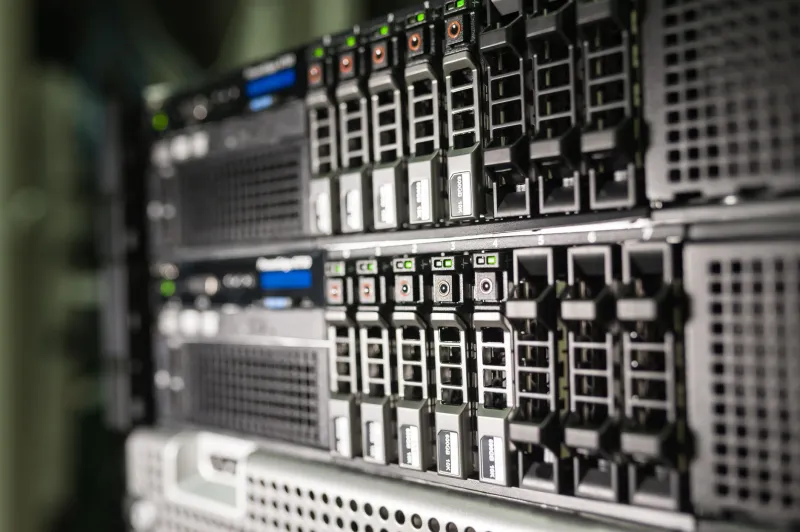
Photo by Photo by Austin Distel on Unsplash on Unsplash
There is a persistent myth in enterprise technology circles: that old software is inherently inferior and that replacing it with modern alternatives is, by definition, progress. Boards approve the budgets. IT leaders present the roadmaps. Vendors deliver the pitch decks. And then, somewhere between the kickoff meeting and the go-live date, the project begins to unravel.
The failure rate of enterprise modernization initiatives is not a secret. Analysts have documented it for decades. Yet organizations continue to pursue these projects with the same optimism—and often the same structural mistakes—that doomed their predecessors. The question worth asking is not whether to modernize, but why so many enterprises modernize poorly, and what distinguishes the organizations that emerge stronger from those that spend three years and tens of millions of dollars to end up worse off than before.
The Stability of the Known
Legacy systems carry a reputation they rarely deserve. They are slow, yes. They may run on infrastructure that requires specialists who are approaching retirement age. Their interfaces can look like artifacts from another era. But they also do something that newer systems frequently cannot: they run predictably.
Years of operational use mean that edge cases have been discovered and accommodated. Business rules that no one remembers writing have been quietly embedded in the codebase, faithfully executing logic that keeps operations running. The organization has, over time, built workflows around the system's quirks. That institutional adaptation is rarely documented, and it is almost never fully appreciated until the system is gone.
When a modernization project begins, the focus is almost universally on features—what the new system will do that the old one could not. The focus is rarely on behavior—all the things the old system was doing that nobody fully catalogued. This gap between documented functionality and actual operational behavior is where modernization projects begin to fail, often before a single line of new code is deployed.
New Architecture, New Failure Modes
Modern enterprise software platforms are architecturally different from the monolithic systems they replace. Distributed components, microservices, API-driven integrations, and cloud-native infrastructure introduce flexibility and scalability. They also introduce a new class of failure modes that legacy environments never had to contend with.
A monolithic system fails in obvious ways. A distributed system fails in subtle ones. Network latency between services can corrupt transaction sequences. Configuration mismatches between environments can produce behavior that only surfaces under specific load conditions. Dependency chains that appear clean in staging can become cascading failure points in production.
Enterprise teams that have spent years managing a known set of risks are now responsible for managing an entirely different risk profile—often without the tooling, training, or institutional knowledge to do so effectively. The new system is not more reliable; it is differently unreliable. And that distinction matters enormously when the business depends on consistent performance.
The Organizational Friction Nobody Budgets For
Technology is only one dimension of modernization failure. The organizational dimension is frequently underestimated and almost never fully funded.
Process reengineering—genuinely rethinking how work flows through the organization to take advantage of the new platform's capabilities—requires time, facilitation, and executive commitment. Most enterprises do not invest adequately in any of these. Instead, they configure the new system to replicate the behavior of the old one, a pattern sometimes called "paving the cowpath." The result is a modern platform running legacy workflows, capturing none of the efficiency gains that justified the investment.
Change management compounds the problem. End users who have developed proficiency over years with the existing system now face retraining, disrupted muscle memory, and the psychological burden of uncertainty. Productivity drops are predictable and well-documented. What is less predictable is how long they last—and how much shadow IT emerges as employees find workarounds to restore the efficiency they lost.
When the Vendor's Timeline Is Not Your Timeline
Enterprise software vendors have a financial interest in accelerating adoption. Faster go-live means faster revenue recognition, faster case study development, and faster reference customer acquisition. This creates a structural tension between the vendor's timeline and the enterprise's readiness.
Pressure to meet contractually defined implementation milestones can lead to shortcuts in data migration validation, insufficient parallel-run periods, and premature cutover decisions. These shortcuts rarely surface as immediate disasters. More commonly, they produce a slow accumulation of data integrity issues, integration failures, and reporting anomalies that take months to fully diagnose—by which point the vendor's implementation team has moved on to the next engagement.
Enterprise buyers should treat vendor-proposed implementation timelines as opening positions in a negotiation, not operational commitments. The cost of extending a parallel-run period by sixty days is trivial compared to the cost of a failed cutover.
A Framework for Modernization That Actually Works
Organizations that navigate modernization successfully tend to share several characteristics. First, they invest heavily in discovery before any platform selection occurs. They document not just what the legacy system is supposed to do, but what it actually does—including the undocumented business rules, the manual interventions that compensate for system gaps, and the data quality issues that have been quietly managed for years.
Second, they treat the modernization as a business transformation project with a technology component, rather than a technology project with a business impact. This distinction changes how the initiative is staffed, governed, and measured.
Third, they resist the temptation to modernize everything at once. Incremental migration strategies—moving discrete functional areas while maintaining legacy operation elsewhere—reduce risk exposure and provide genuine learning opportunities before the stakes are highest.
Finally, they build explicit success metrics that go beyond go-live. System availability, transaction accuracy, user adoption rates, and process cycle times should all be tracked against pre-modernization baselines for a minimum of six months post-cutover.
The Real Measure of Progress
Modernization is not inherently good or bad. It is a means to an end. The enterprises that treat it as an end in itself—as proof of technological sophistication or competitive positioning—are the ones most likely to find themselves managing a crisis that their old system never would have created.
The goal is not a modern system. The goal is a system that performs better, costs less to operate, and positions the organization for future growth. Those outcomes require discipline, rigor, and a willingness to move more slowly than vendors and internal advocates will prefer. In enterprise technology, patience is not a weakness. It is frequently the difference between transformation and catastrophe.